





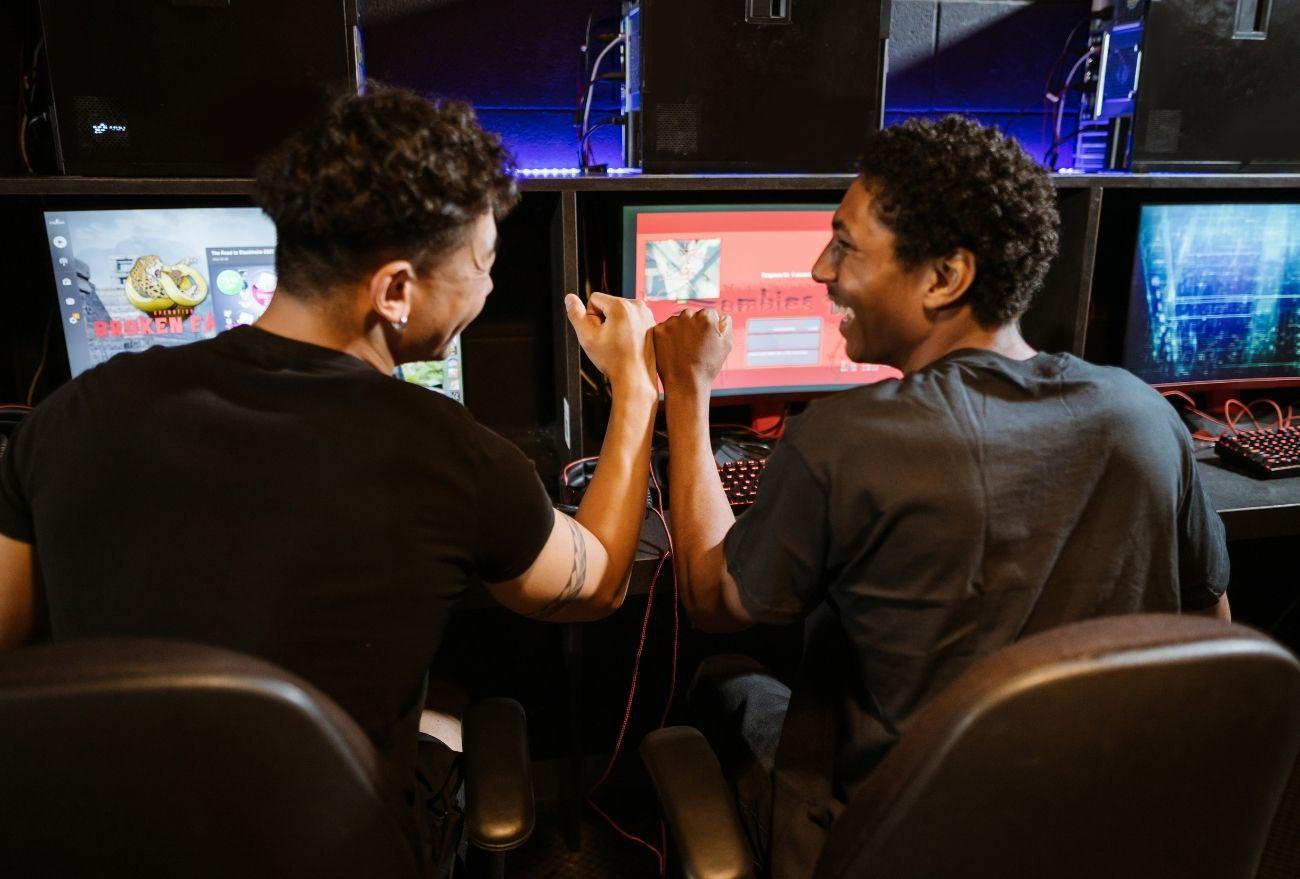
Be social, make friends and play video games
But even sitting alone for hours, gamers aren’t necessarily isolated. In many cases, far from it. Video games have become a very social form of entertainment, with teams and players cooperating to reach a common goal. With the rise of social media, gamers – particularly in Gen Z – have perfected the art of building communities in and around video games. Gamers don’t just compete with strangers on the internet, but forge genuine, enduring friendships.
We may set video games in fictitious worlds, but you can learn some important social skills while gaming.
Some video games have you interacting with characters, if not other gamers. Developers increasingly use dialogue to make storylines and NPCs more engaging, while your main character can even grow abilities that affect interactions. Such features have a lot to teach.
Video Games Can Help With Social and Emotional Needs
Firstly, your social skills in a virtual world can improve your interactions in the real one.
Secondly, video games can bring people closer, especially with the help of online and multiplayer technologies. Friends, colleagues, and even couples can relax and bond over an adventure.
Over 70% of gamers play with a friend, by playing against each other or working cooperatively in a team. Games such as World of Warcraft open up virtual worlds and communities that extend far beyond the computer screen.
In this age of long-haul social distancing and mental-health strains, gamers have long had a tool that’s now bringing some relief to those who’ve never picked up a controller before. The explosive growth of gaming during the pandemic has shown that many have found a new outlet for much-needed connection in isolation.


Connect online
Gamers have the ability to connect with players locally or team up with people from countries around the world. A large proportion of young people playing multiplayer games have developed good friendships with people they met online.
Video games have created a fun and engaging way of connecting with people and can act as an important teaching tool in developing social skills. Video games can help develop cooperation skills and supporting skills as players have the option to work together to form alliances and create teams working cooperatively. Many video games often result in better outcomes if players work together, encouraging players to be social. Video games also provide the players with the opportunity to take a leader’s position, which requires greater social networking skills and team work to keep other players happy.
These skills are important in the outside world for creating and maintaining friendships, especially in school and work environments. Studies have shown that playing video games, including violent video games can create and improve friendships amongst players. Players can be fighting against each other in the game but are developing their friendship as they work together and share the experience.
- Starting Conversations
Story-based titles in genres like adventure or role-playing will have you talking with other characters to get quests, gather information, or even recruit them into your party. In online gaming, you also need to interact with players—actual people—to find common ground and form teams. Even if you just want to buy or sell something, you need to start up a conversation.
You’ll take that first step repeatedly. What you can learn is how to approach people and put them at ease, and what doesn’t make a good impression. In some games, for example, talking to someone with your weapon drawn is a no-no.
- Winning People Over
After breaking the ice, some video games will have you work hard to win other characters over. The reason could relate to a quest or pure character development.
Apart from understanding the benefits of a silver tongue, you can pick up tips on what to say or do in different real-life situations. Not only that, but you learn to work on your social skills just like any other ability.
- Building Relationships
With online gaming thriving at every turn, playing well with other is important.
When it comes to AI-based party members in video games, you can find side quests in them that only trigger if you interact enough. Building these fictional relationships mainly requires talking and choosing the right dialogue to win the character over. Some titles like Dragon Age also feature gifts, small or meaningful, to give companions.
The social skills you learn from such video games include creating and enjoying deeper connections with people. But also see how important it is to listen, understand their values, and make friendly gestures.
- Building and Managing a Team
A typical party consists of two to six characters, so the more companions you have, the more time and effort it can take to build relationships. The matter becomes more complicated with online and multiplayer games.
In fact, a Human Factors and Ergonomics Society study shows that the success of an e-Sports team largely depends on players in critical positions. So, good relationships and teamwork are essential. In some video games, just adventuring with AI characters strengthens bonds and triggers unique dialogues and experiences. This teaches you the importance of spending time with people.
You also get to understand teamwork, starting with choosing your party members. And it’s not just about combining the best skills to complete a quest or the entire game.
There are titles, for example, with complex companions who interact with each other and even clash. Usually, you can mediate and help everyone work together. Other times, you have no control, just consequences.
With good character development becoming vital to video games, there’s no shortage of intriguing social situations you’ll find yourself in. Each can give you tips on helping your virtual and real-life teams bond, succeed, avoid conflict, and more.
- Appreciating Individuality
Video games often owe their popularity to memorable characters, whether heroes, villains, or something in between. The best productions will have several figures that draw you in and make you want to find out more about them.
Thanks to this, immersion can go through the roof. At the same time, you learn to appreciate people and what makes them special. Open-mindedness is always a plus with social skills.
- Empathizing With Different People
Interesting and relatable characters make titles like Red Dead Redemption 2 and God of War extra popular. Playing a different person in each game and interacting with a huge range of companions means that you mix with lots of people.
As a result, you broaden your mind by stepping into their shoes and getting to know their stories. Additionally, since fiction does come from real life, video game characters can push your understanding of human behavior even further.
- Interacting Patiently
Video games show you the best and worst personalities you could come across. Armed with that knowledge, as well as greater appreciation and empathy, you might find yourself more patient with people.
Eventually, you should be able to talk to anyone in a respectful and engaging way. With practice, even the most difficult people won’t be able to push your buttons.
- Defusing Situations
If you do get into a heated argument, you don’t have to turn to violence to resolve it. Video games give you all the experiences and tricks you need to stop a bad situation from becoming worse.
Persuasion or bribery options in games often provide smart tips. A bribe in real life, for example, could take the form of compromise to keep the peace.
Combine that with a few well-placed words and you can turn the tide in any dispute. Gaming has a lot more dialogue tricks to offer, so pay attention and see what you could use yourself.
- Confident Socializing
These abilities lead to something even more important: confidence. Being able to communicate better with all kinds of people can boost your self-esteem like nothing else.
Additionally, your braver attitude feeds into your social skills, creating a constant cycle of self-improvement. However, it’s also a slippery slope.
Be careful not to let your confidence turn into arrogance. At the same time, leave the bad parts of video games where they belong. No matter how fun, limit your virtual world’s influence on your life.
- Emotional Control
Confidence, excitement, and emotional connection are some of the many experiences video games can give you. Scientific studies on stress-relief through gaming show just how refreshing video games can be.
But it doesn’t just come down to their design and impact on players. Diving in and actively embracing as much of a game as possible lets you absorb more from experiences.
Using your controls right while battling aliens and dragons, for example, hones your focus and muscle memory, not to mention your ability to control your emotions in stressful situations.
In terms of social skills, gaming with full awareness can develop your emotional intelligence and response to different interactions.
Even better, you could learn how different video games and features affect you, so you can use them to manage your emotions. Gaming can be helpful and entertaining.
Video Games Can Help With Social and Emotional Needs
Gaming can provide comfort as much as knowledge. Firstly, your social skills in a virtual world can improve your interactions in the real one. You just need to spot handy insights and use them.
Secondly, video games can bring people closer, especially with the help of online and multiplayer technologies. Friends, colleagues, and even couples can relax and bond over an adventure. Always take care, however, not to go overboard.